Understanding Natural Components for Male Wellness

Explore the science of botanical ingredients and their role in supporting overall well-being, healthy aging, and natural vitality through informed knowledge.

Lush botanical garden with herbs and natural plants

The Role of Botanicals in Daily Vitality

Botanical ingredients have been utilized across cultures for centuries to support daily energy and overall balance. These natural compounds offer nutritional benefits that complement a healthy lifestyle when integrated thoughtfully into one's routine.

Understanding how plant-based extracts work with the body's natural processes provides foundation for informed wellness decisions. Rather than miraculous solutions, botanicals represent a nuanced approach to supporting sustained well-being through nature's complexity.

  • Support general vitality and energy levels
  • Provide antioxidant and nutritional benefits
  • Complement healthy lifestyle practices
  • Work synergistically with balanced nutrition

Fresh botanical ingredients and natural herbs

Nutritional Science Behind Plant Extracts

Modern scientific research increasingly validates the nutritional profiles of botanical ingredients. Studies explore how phytochemicals—natural compounds produced by plants—interact with human physiology to support various aspects of wellness.

Plant extracts contain diverse bioactive compounds including polyphenols, flavonoids, and alkaloids. These substances have been studied for their antioxidant properties, their role in supporting inflammatory responses, and their contribution to nutritional adequacy. Scientific evidence supports the general health benefits of plant-based nutrition without making specific medical claims.

The mechanism of action varies by ingredient. Some botanicals are rich in specific nutrients like vitamins and minerals. Others provide compounds that the body recognizes and utilizes as part of normal metabolic processes. Understanding these mechanisms helps users make informed choices about which ingredients align with their wellness priorities.

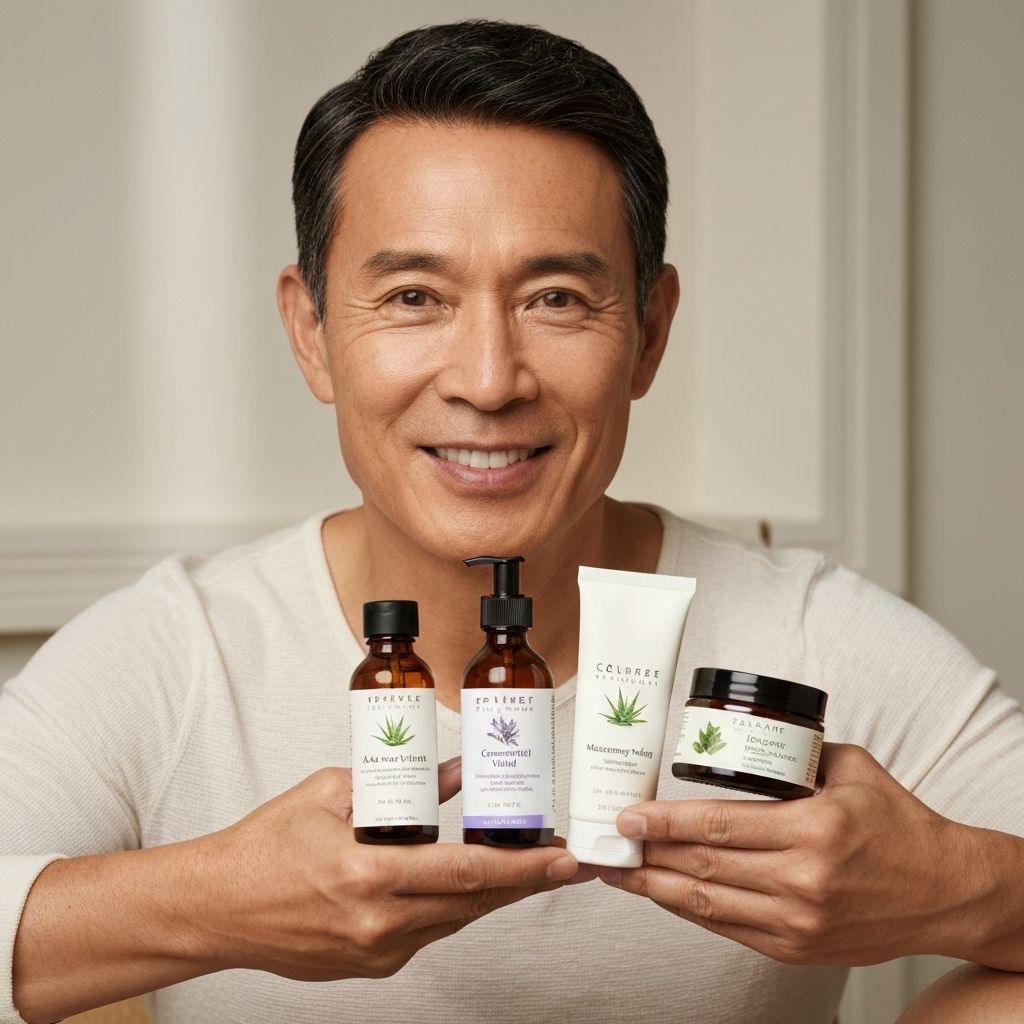
Natural Skincare Principles for Men After 40

Skin changes are a natural part of aging, and mature men benefit from understanding how to maintain healthy skin through gentle, natural approaches. Proper hydration, sun protection, and targeted skincare routines form the foundation of age-appropriate skin health.

Botanical extracts offer natural alternatives for skincare formulations. Ingredients rich in antioxidants and hydrating compounds support skin barrier function and maintain elasticity. A consistent routine that respects the skin's natural processes proves more effective than aggressive interventions.

Key principles include regular cleansing, adequate hydration, sun protection, and the use of naturally-sourced ingredients that work with the skin rather than against its natural balance.

Natural skincare routine with botanical ingredients

A Holistic View of Well-being

True wellness extends beyond single ingredients or quick solutions. The interconnectedness of diet, exercise, mental clarity, sleep quality, and stress management creates the foundation upon which botanical support becomes meaningful.

Man meditating peacefully in nature

Mental and Physical Balance

Meditation, mindfulness, and contemplative practices support mental clarity and stress reduction. These practices complement nutritional approaches and create psychological conditions favorable to overall health.

Man hiking in beautiful natural landscape

Active Lifestyle and Natural Movement

Regular physical activity—whether hiking, gardening, walking, or structured exercise—strengthens the body and enhances cardiovascular health. Movement patterns that feel natural and sustainable prove most effective for long-term wellness.

Man enjoying healthy balanced meal with fresh vegetables

Nutrition as Foundation

A balanced diet rich in whole foods, vegetables, quality proteins, and healthy fats provides the nutritional foundation. Botanical ingredients serve as complements within this broader nutritional strategy rather than standalone solutions.

Key Botanical Ingredients and Their Properties

The following table presents commonly studied botanical ingredients, their general properties, and traditional uses. This information is educational and reflects historical and scientific perspectives without making medical claims.

Ingredient General Properties Traditional Uses Nutritional Profile
Ginseng Root Adaptogenic herb with energizing properties Energy support, stress adaptation Ginsenosides, polysaccharides
Gotu Kola Rich in antioxidants, supports circulation Traditional wellness support, skin health Flavonoids, triterpenoids
Saw Palmetto Contains phytosterols and fatty acids General male wellness support Plant sterols, lipids, polysaccharides
Tribulus Terrestris Rich in saponins, supports natural balance Traditional vitality support Saponins, flavonoids
Maca Root Nutritionally dense, energy-supporting Energy, stamina, general wellness Amino acids, minerals, vitamins
Nettle Leaf Mineral-rich plant, nutritional support General health, mineral supplementation Iron, calcium, magnesium, silica
Green Tea Extract High in catechins, powerful antioxidant Antioxidant support, general wellness EGCG, catechins, polyphenols
Ashwagandha Adaptogenic, stress-supporting herb Stress adaptation, energy balance Withanolides, alkaloids
Collection of botanical ingredients and dried herbs

Myth vs. Fact in Natural Wellness

Common misconceptions about natural ingredients can lead to unrealistic expectations. Understanding the difference between marketing claims and scientific evidence is essential for informed decision-making.

Myth: Natural Means Automatic Results

Botanical ingredients work within the body's natural processes. Effects are subtle, gradual, and highly individual. No ingredient creates overnight transformations or guaranteed outcomes.

Fact: Science Supports Many Traditional Uses

Many botanicals studied for centuries are now validated by scientific research. However, evidence varies in robustness. Critical evaluation of research quality matters more than ingredient popularity.

Myth: Higher Doses Always Mean Better Results

Optimal benefits come from appropriate dosing. Excessive amounts may not increase effectiveness and can introduce unnecessary elements into the body.

Fact: Consistency Matters More Than Intensity

Sustainable daily practices produce better results than sporadic intensive efforts. This applies to nutrition, exercise, sleep, and stress management equally.

Myth: One Ingredient Can Address Multiple Issues

While some ingredients have broad application, wellness benefits from comprehensive approaches addressing diet, exercise, sleep, and stress management together.

Fact: Individual Response Varies Significantly

Genetic differences, lifestyle factors, current health status, and personal biochemistry mean that different people respond differently to the same ingredient.

Educational balance symbolizing myth versus fact in wellness

Lifestyle Practices for Enhanced Vitality

Botanical ingredients work most effectively within a context of supportive lifestyle practices. The following habits complement any nutritional approach and contribute meaningfully to overall well-being.

Daily Movement and Exercise

Regular physical activity strengthens the cardiovascular system, maintains muscle mass, supports bone density, and improves mental health. Movement patterns that bring joy and sustainability matter more than intensity.

Sleep Quality and Consistency

Quality sleep forms the foundation of wellness. Consistent sleep schedules, adequate duration (7-9 hours), and sleep environment optimization support physical recovery and mental clarity.

Stress Management

Chronic stress undermines wellness regardless of nutritional inputs. Meditation, breathing practices, time in nature, social connection, and purposeful activities all reduce stress effectively.

Hydration and Nutrition

Adequate water intake, balanced macronutrients, and micronutrient variety form the dietary foundation. Whole foods provide superior nutrition compared to isolated supplements.

Man engaged in healthy daily practice in morning sunlight

The Importance of Informed Choices

Making conscious decisions about botanical ingredients requires understanding ingredient lists, sourcing standards, and product quality. Knowledge empowers individuals to align their wellness choices with their values and needs.

Reading Ingredient Labels

Ingredient lists reveal product composition. Understanding what you're consuming allows evaluation of quality, potential allergens, and alignment with personal preferences.

Evaluating Source and Quality

The origin of botanical ingredients affects their potency and purity. Ingredients sourced from reputable growers and verified for contaminants ensure product quality and safety.

Understanding Extraction Methods

Different extraction methods produce different concentrations and profiles of active compounds. Water extracts, alcohol extracts, and standardized extracts each offer distinct characteristics.

Researching Evidence

Seeking peer-reviewed research, understanding study design, and recognizing the difference between preliminary research and established evidence enables critical evaluation of claims.

Person researching and reading ingredient information

Limitations and Context

This educational content presents information about botanical ingredients and general wellness practices. It provides context and knowledge without making individual recommendations. The approach to wellness remains deeply personal, with numerous valid methods and practices. This information does not replace professional consultation for specific health concerns or conditions. Individual responsibility for wellness decisions remains paramount.

Continue Your Wellness Exploration

This knowledge hub offers comprehensive information about botanical ingredients, natural wellness practices, and informed decision-making. Explore our specialized content to deepen your understanding of natural vitality.

Explore Further

Educational content only. No promises of outcomes.